
Materials
An overview of raw materials commonly found on FRC robots, including tips for handling them and use cases. This is specifically on materials used to make custom plates and parts, not necessarily COTS items.
For more information on materials used in 3D printing, like TPU or PLA, refer to the Intro to 3D Printing page for more information.
Aluminum
Section titled “Aluminum”Aluminum is one of the most versatile materials in FRC. It is both durable and easy to work with which means it’s perfect for many applications. It’s great for its cost; compared to other metals, it is relatively affordable. They are ideal for many applications where strength and structure are needed. In applications where this support isn’t important, it may be more optimal to use a cheaper material like polycarbonate or to cut weight with SRPP. In addition, aluminum is not ideal for places where it extends beyond frame perimeter like intakes as it can easily bend or fail catastrophically.
This section focuses on aluminum plates and blocks, however they are used everywhere in COTS and stock items like shafts, extrusions, etc. The thickness of the metal and type (6061 vs 7075) are important considerations as they each have different use cases.
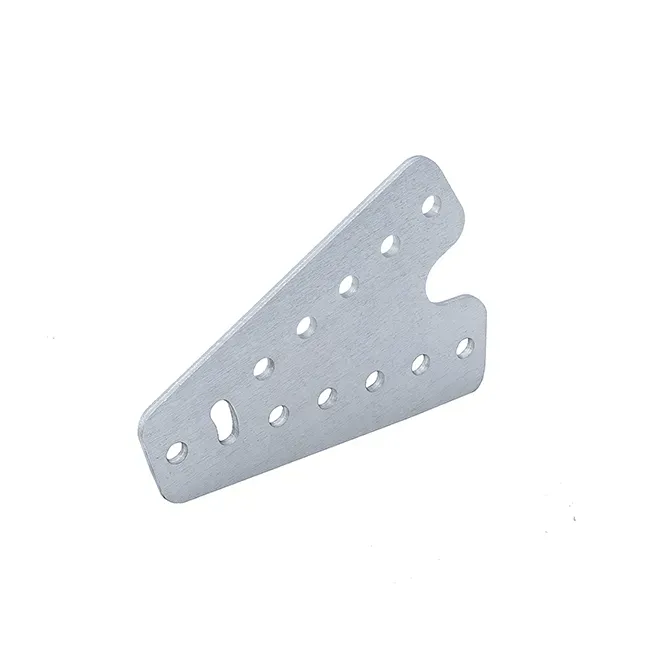
Example of gusset made out of aluminum. Credit: CTRE.
Sheet Thickness
Section titled “Sheet Thickness”Aluminum sheets can come in many thicknesses. The following are common thicknesses, however consider them as more ranges than single values.
1/16” or 0.090”: Such thin metal is almost exclusively used for supports, like gussets or bellypans. Easy to route and use, it is very helpful in many cases.
1/8”: 1/8” aluminum can play a variety of roles, from structural pieces to gussets. It can be more beneficial than 1/4” material because of its lower weight, however in cases involving high loads and forces, 1/4” is preferred.
For outer frame tubes on a drivetrain, it is best practice that they are 1/8” rather than 1/16” because of the large forces they’d experience from robot collisions.
1/4”: Best thickness for anything structural, where strength is needed (i.e. high load pivots).
Although many types of aluminum alloys exist, the most commonly used in FRC is 6061-T6 followed by 7075. 6061 is best because of its ability to be both strong and easy to machine with. For most applications, it works well. However, in applications where more strength to handle higher loads is wanted, 7075 aluminum can be helpful. For more information on alloys aside from the two discussed, visit this website to learn more.
7075 aluminum is used in many COTS items, notably solid hex shafts and gears. It is important to note the alloy on vendor websites if attempting to machine or modify COTS items.
Billet
Section titled “Billet”Billet parts are blocks of metal that are machined through milling to remove part of it. They are usually made of 6061 aluminum. It is rare to see custom billet because of the difficulty in manufacturing for many teams, however they can be an important tool for many teams. Many COTS parts are made of billet material, such as tube plugs.
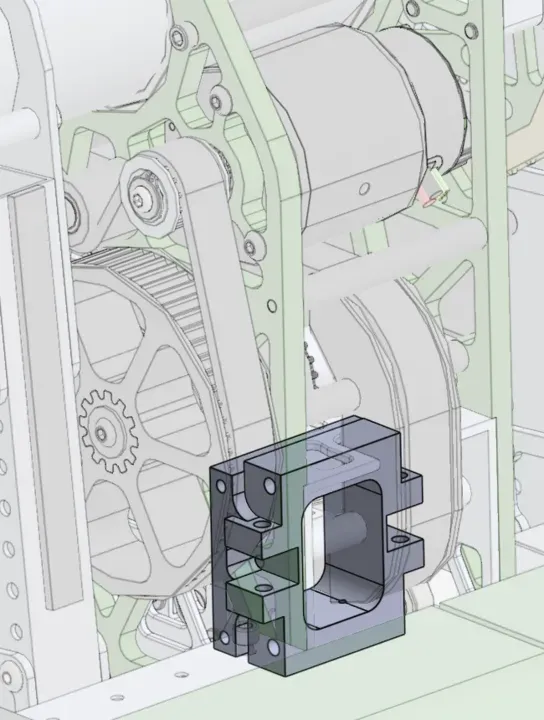
Billet part used on the end of 2910’s 2023 telescoping tube. These parts can range wildly in complexity, and depends significantly on your team’s capabilities.
Polycarbonate
Section titled “Polycarbonate”Also known as Lexan, polycarbonate or “polycarb” is a very versatile and useful material used in applications where less strength is needed and where aluminum is overkill/not optimal. Polycarbonate plastic is used in high impact applications such as subsystems that are exposed beyond the robot frame perimeter. Typically 1/4” thickness is used. 1/8 or 1/16” polycarbonate can be used for dust covers, sponsor panels, etc. - it will almost never shatter, and looks great.
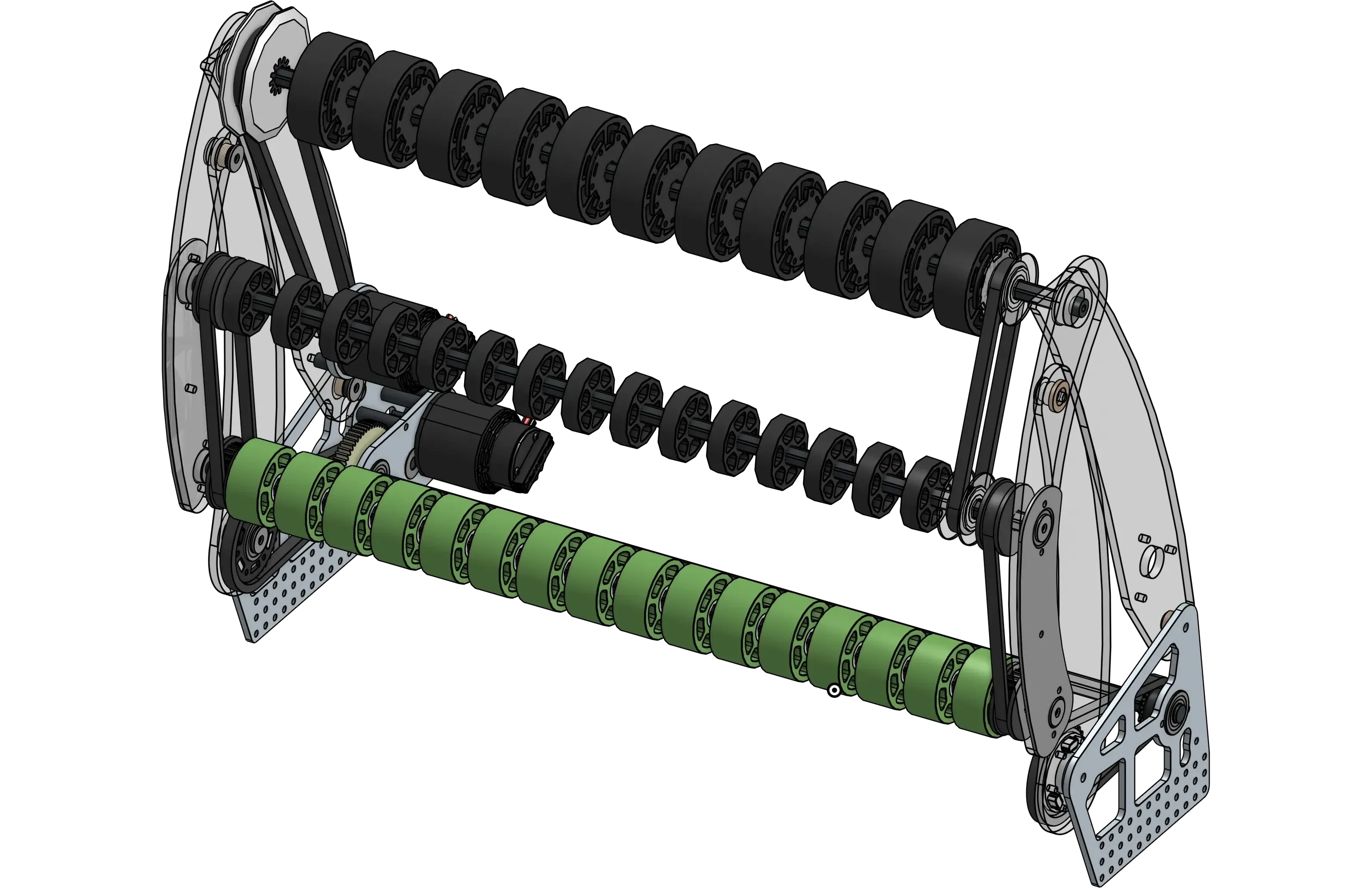
Example of polycarbonate plates on 1678’s 2022 intake.
Do not use loctite around polycarbonate! This can cause the plate to crack irreversibly. For bolts that are susceptible to vibrating out of plate, be sure to tighten them regularly and take care when assembling.
Sheet Thickness
Section titled “Sheet Thickness”1/32”-1/8”: Often used where strength is not important, such as in dust covers or sponsor plates. Can be great as a material for floors, for example the polycarbonate backing of shooters.
1/4”: Great for applications where more strength is needed. For maximum strength, switching to aluminum instead may be better.
“Smoked” or “tinted” polycarbonate can provide a more aesthetic look than clear. While making smoked polycarbonate is difficult, making frosted is easy! 30 seconds of sanding with an orbital sander using 240 grit will give the material a nice, glassy finish. In addition, stickers (i.e. sponsor stickers) on the plate will stand out much more on tinted polycarbonate.
Make sure to check your supplier’s thickness and tolerance for each material. Sometimes, something marketed as in imperial measurements is actually manufactured to fit metric tolerances. For instance: 1/4” polycarbonate is actually sometimes manufactured as 6mm, which is 14 thousandths of an inch off of 1/4in. Account for these actual stock measurements when designing to make sure things end up fitting together!
Steel is a useful alternative to aluminum when maximum strength is needed or for ballast. Some teams may opt to have a steel bellypan instead of aluminum, for example, in order to lower their center of gravity. It is also used in some COTS items like steel hex axles or bolts. Custom machined steel plates or parts are rare in FRC because of how difficult it is to machine with (steel saws and sanders are needed to work with steel). In almost all cases, teams will have to reach out to an outside manufacturer in order to make it.
Self-Reinforced Polypropylene (SRPP)
Section titled “Self-Reinforced Polypropylene (SRPP)”SRPP is an increasingly popular material in FRC for its weight savings and strength compared to polycarbonate. It is a less toxic compound used in plates, and it is composed of fibers woven into a “fabric” (similar to carbon fiber). It is both stiffer and significantly more impact resistant than polycarbonate. Plus, it also weighs much less, which can be hugely important for weight savings. It is a great material for mechanisms that are often outside of frame perimeter, like intakes; where polycarbonate might be used, SRPP can often be slotted in.
The major drawback is its expense: it costs $250 a sheet compared to $80 for polycarbonate. In addition, machining it is slightly different than polycarbonate. Laser cutting is the preferred method for clean, precise cuts. However, it can also be routed with a CNC machine, though extra precaution should be taken. It is fine to cut sheets, i.e. with a table saw. More information on manufacturing can be found at a vendor’s website, for example REV Robotics guide for SRPP.
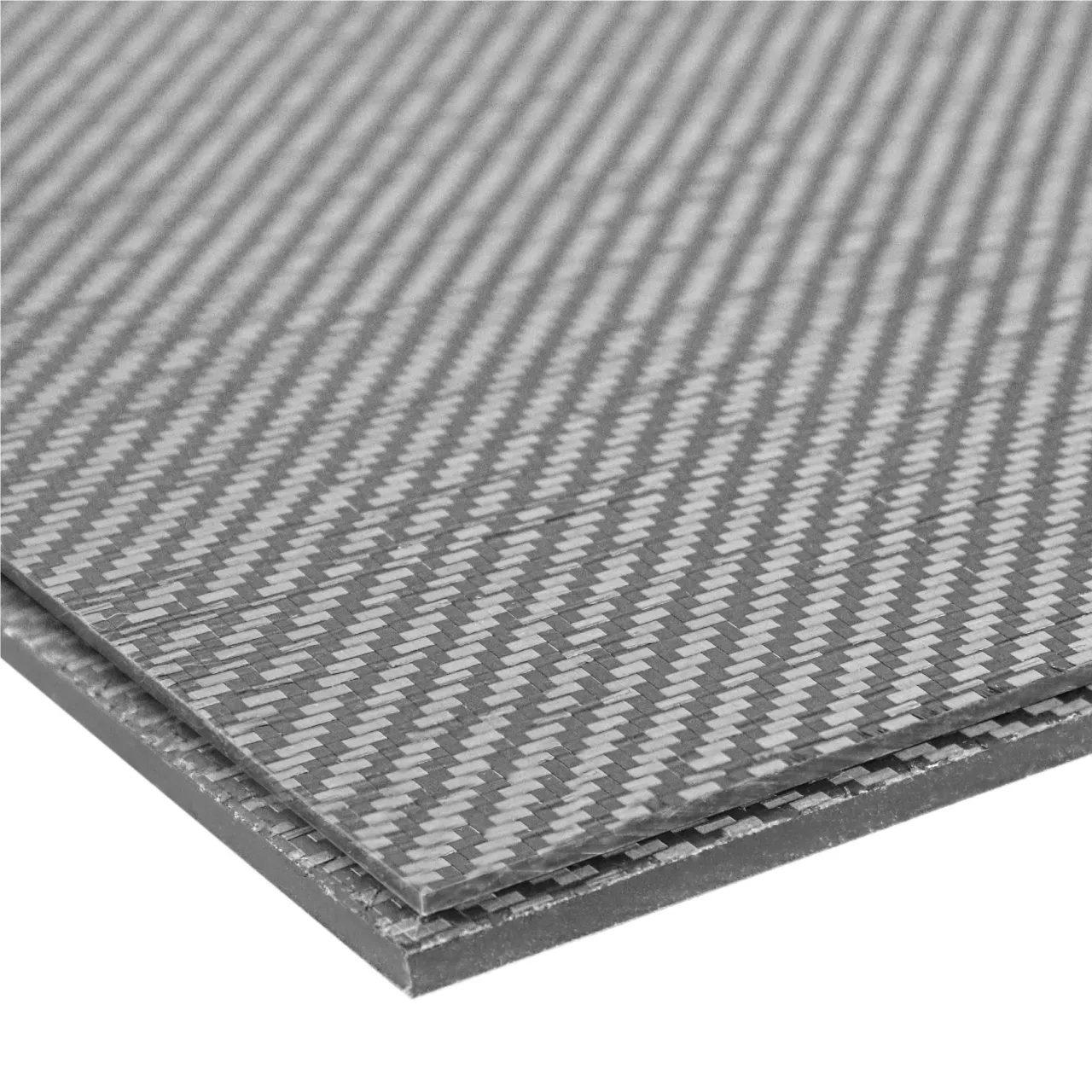
SRPP sheet. Credit: REV Robotics.
SRPP is resistant to many chemicals, including loctite! This means you can loctite bolts around SRPP, unlike polycarbonate, with no issues.
Carbon Fiber
Section titled “Carbon Fiber”Coming Soon
Wood is a useful material for prototyping or testing ideas before creating it out of the intended (and more expensive) material. Due to its brittleness, it should almost never be on an FRC robot. It is easy to source, machine, and use, and can be an essential tool for prototyping whole mechanisms before they’re put on the robot.
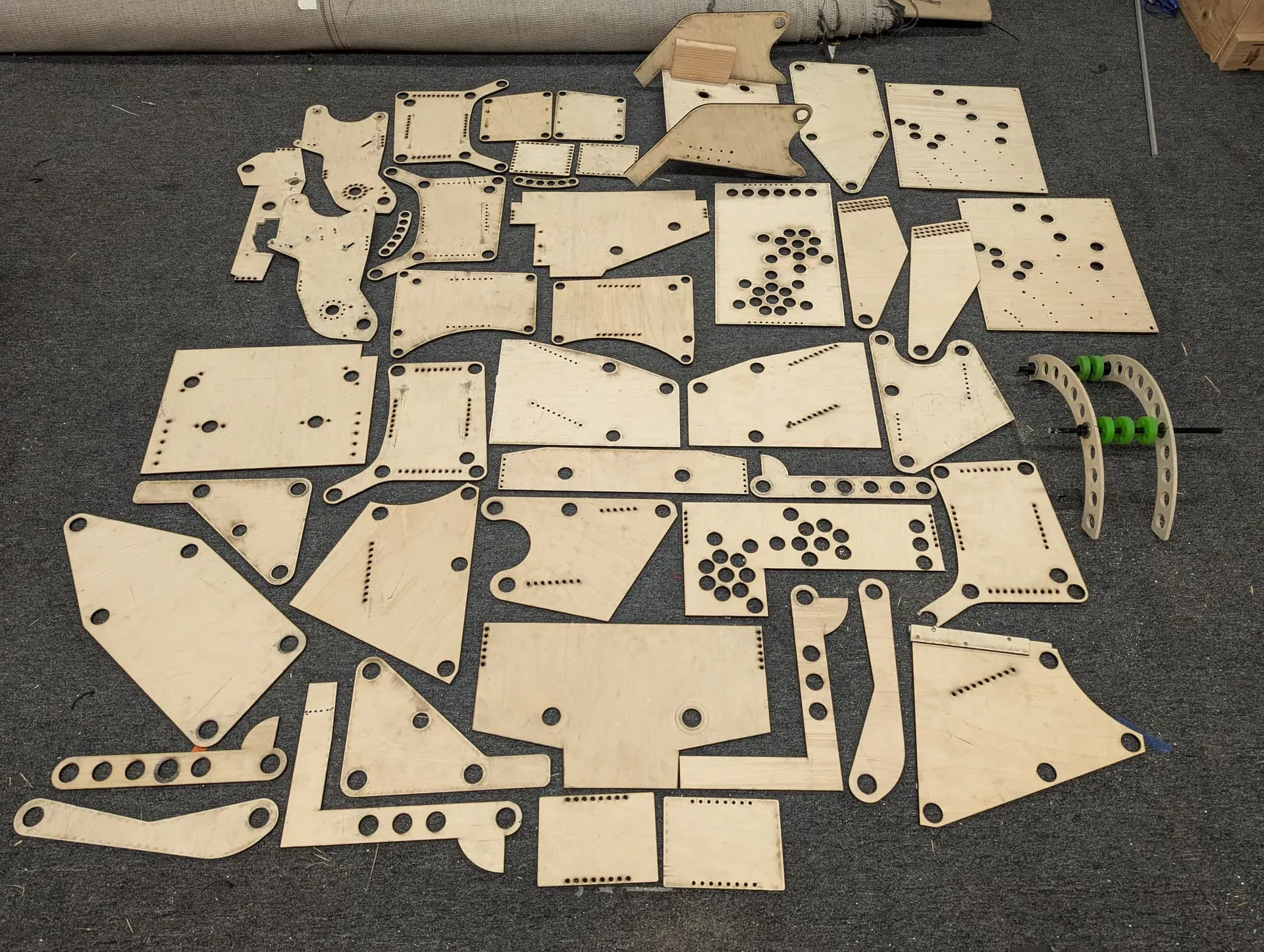
The usefulness of wood for prototyping, especially if you have a laser cutter. Can make many prototypes quickly. Credit: Team 1540.